

How Can Your Genetic Makeup Affect Your Personality And Behavior?
Chromosomes and Genes
Chromosomes contain genetic material that can determine a person'south characteristics.
Learning Objectives
Explain the role chromosomes play in carrying genetic information
Cardinal Takeaways
Key Points
- Chromosomes are structures in the nucleus of a cell containing Dna coiled around histone proteins.
- All animals have some number of chromosomes, which transmit genetic cloth. Human beings take 46 chromosomes (23 pairs).
- Humans accept two types of chromosomes: autosomes and sexual practice chromosomes.
- Chromosomal abnormalities tin can result in genetic conditions such as Down syndrome.
Key Terms
- chromosome: A structure in the cell nucleus that contains Dna, histone protein, and other structural proteins.
- cistron: A unit of measurement of heredity; a segment of DNA or RNA transmitted from i generation to the next, carrying genetic information such as the sequence of amino acids for a protein.
- autosome: Any chromosome that is non a sex activity chromosome.
Chromosomes are structures in the nucleus of a jail cell containing DNA, histone protein, and other structural proteins. Chromosomes also contain genes, most of which are made up of DNA and RNA.
DNA, or dna, determines whether our eyes are bluish or brown, how tall we will be, and even our preference for certain types of behavior. Known as our "genetic lawmaking," it is shaped like a double helix, made of sequences of nucleic acids attached to a carbohydrate phosphate backbone. Genes are subsections of DNA molecules linked together that create a particular characteristic.
Each chromosome is made up of a single Deoxyribonucleic acid molecule coiled around histone proteins. Research dating back to the 1800s shows that every living fauna has a specific set of chromosomes in the nucleus of each of its cells.

Human chromosome structure: Chromosomes are made up of a variety of gene sequences. Past studying chromosomes and genes, scientists are able to determine the genetic basis for many diseases.
Homo chromosomes are divided into two types—autosomes and sex chromosomes. Some genetic traits are linked to a person's sex and therefore passed on past the sex chromosomes. The autosomes contain the rest of a person'south genetic information. All man beings have 23 pairs of chromosomes by which genetic material is developed and characteristically demonstrated; 22 of these are autosomes, while the remaining pair (either XX, female, or XY, male) represents a person'southward sex chromosomes. These 23 pairs of chromosomes piece of work together to create the person nosotros ultimately go.
Chromosomal abnormalities tin can occur during fetal development if something goes wrong during the replication of the cells. Common abnormalities include Downward syndrome (caused by an extra chromosome #21), Klinefelter syndrome (caused past an extra X chromosome), and Turner syndrome (acquired past a missing X chromosome). Genetic counseling is available for families in gild to determine if any abnormalities exist that may be passed forth to offspring. Many chromosomal abnormalities are of psychological importance, with substantial impacts on mental processes; for example, Downward syndrome tin cause balmy to moderate intellectual disabilities.
Equally science advances, the ability to dispense chromosomes is becoming more than realized. Cloning is an example of taking chromosomal and genetic textile and creating a new animal, and was offset successfully achieved in the famous case of Dolly the sheep. There is much controversy surrounding the manipulation of chromosomes in human beings, with many people believing information technology to be unethical.
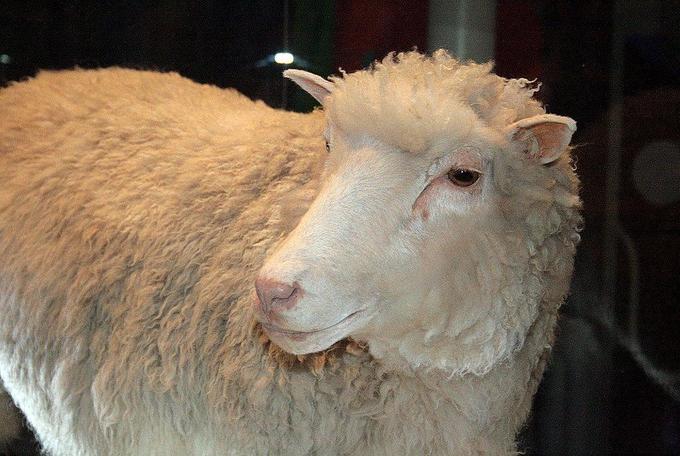
Dolly the sheep: The offset successfully cloned animal. Chromosomal and genetic manipulation are controversial topics.
Cistron-Environment Correlations: Nature or Nurture?
Genetic expression tin can be influenced by diverse social factors, as well as environmental factors, from lite and temperature to exposure to chemicals.
Learning Objectives
Analyze the relationship between genes and environment
Key Takeaways
Key Points
- Today it is generally accepted that nature and nurture work in tandem to create the people we ultimately become.
- Adoption and twin studies evidence that both nature and nurture are factors in human development.
- The environment in which a person is raised can trigger expressions of beliefs for which that person is genetically predisposed; genetically identical people raised in different environments may exhibit different behavior.
- Three types of factor -surroundings correlations (rGE) exist: passive (ambiguous correlation), evocative (one gene invokes a response in the other), and active (one factor influences a preference for another).
Primal Terms
- factor-environment correlation: A relationship in which exposure to environmental conditions correlates with an private'south genotype.
- phenotype: The observable expression of a gene.
Our genetic destiny is non necessarily written in stone; information technology tin be influenced by several factors, such as social factors, likewise every bit environmental influences among which nosotros live, including anything from low-cal and temperature to exposure to chemicals. The environment in which a person is raised tin trigger the expression of behavior for which a person is genetically predisposed, while the same person raised in a different environment may exhibit different behavior.
Long-continuing debates have taken place over the idea of which factor is more important, genes or environs. Is a person destined to take a detail issue in life because of his or her genetic makeup, or tin can the environment (and the people in it) piece of work to change what might be considered "bad" genes? Today, it is more often than not agreed upon that neither genes nor environment work alone; rather, the ii piece of work in tandem to create the people we ultimately get.
Environmental elements like light and temperature have been shown to induce sure changes in genetic expression; additionally, exposure to drugs and chemicals tin can significantly impact how genes are expressed. People often inherit sensitivity to the effects of various ecology hazard factors, and unlike individuals may exist differently affected by exposure to the same surround in medically significant means. For example, sunlight exposure has a much stronger influence on skin cancer risk in blanched humans than in individuals with an inherited tendency for darker skin. The color of a person'southward peel is largely genetic, simply the influence of the environment volition impact these genes in different ways.
Cistron-environment correlations, known as rGE, tin be explained in 3 particular ways—passive, evocative, or active.
Passive Gene-Environment Correlations
In passive gene-environment correlation, an association exists betwixt a person's genetic makeup and the environs in which he or she is raised. In other words, the person's environment, particularly in the example of children, is largely determined by the parent'southward genetic characteristics. Parents create a domicile surroundings that is influenced by their own heritable characteristics. When the children'south own genotype influences their behavior or cognitive outcomes, the result can exist a misleading relationship between environment and outcome. For example, an intelligent parent is probable to create a habitation environment rich in educational materials and experience. Since intelligence is moderately heritable, it can be argued that intelligence in the child is inherited rather than a factor of the home environment created by the parents. It is relatively unclear whether the genetic or environmental factors had more to practice with the child's development.
Evocative Gene-Environment Correlations
Evocative factor-environment correlation happens when an individual'southward (heritable) behavior evokes an environmental response. For example, the association betwixt marital conflict and depression may reflect the tensions that ascend when engaging with a depressed spouse rather than a causal outcome of marital disharmonize on run a risk for depression.
Active Gene-Environs Correlations
In agile factor-environment correlation, the person'south genetic makeup may lead them to select particular environments. For example, a shy person is likely to choose repose activities and less boisterous environments than an extroverted individual. He or she may exist more likely to spend time at the library than at a dance guild.
Adoption and Twin Studies in the Nature vs. Nurture Debate
Adoption and twin studies can assistance make sense of the influence of genes and the environment. Studies of developed twins are used to investigate which traits are heritable. Identical twins share the aforementioned genotype, meaning their genetic makeup is the same. Twins raised apart tend to exist similar in intelligence and, in some cases, life events and circumstance, when studied years later, even when raised separately.
Still, researchers have discovered that the phenotype (or the observable expression of a factor) of identical twins grows autonomously every bit they historic period. In adoption studies, identical twins raised past different families tin can requite insight into the nature-versus-nurture debate. Since the kid is being raised past parents who are genetically different from his or her biological parents, the influence of the environment shows in how like the child is to his or her adoptive parents or siblings. Adoption studies make a strong instance for the influence of surroundings, whereas twin studies make a strong case for genetic influence.
The Influence of Genes on Beliefs
Genetic makeup has a large role in determining human behavior.
Learning Objectives
Narrate the field of behavioral genetics
Fundamental Takeaways
Key Points
- Classical, or Mendelian, genetics examines how genes are passed from one generation to the next.
- Behavioral genetics examines the role of genetic and ecology influences on creature (including man) behavior.
- At that place are many ways to manipulate genetic makeup, such as cross-breeding to achieve certain characteristics.
- Information technology is hard to ascertain whether genetics ("nature") or the surround ("nurture") has a stronger influence on behavior. It is mostly believed that homo beliefs is determined by complex interactions of both nature and nurture.
Key Terms
- behavioral genetics: The field of study that examines the function of genetics in brute (including human) behavior; often involves the nature-versus-nurture fence.
- ethology: The scientific report of human being and animal behavior.
- genetics: The branch of biology that deals with the transmission and variation of inherited characteristics, specially chromosomes and Dna.
The influence of genes on behavior has been well established in the scientific customs. To a large extent, who nosotros are and how we behave is a result of our genetic makeup. While genes exercise not determine beliefs, they play a huge role in what we do and why we practice information technology.
Behavioral Genetics
Behavioral genetics studies heritability of behavioral traits, and it overlaps with genetics, psychology, and ethology (the scientific written report of human and animal behavior). Genetics plays a big part in when and how learning, growing, and development occurs. For instance, although surround has an effect on the walking behavior of infants and toddlers, children are unable to walk at all before an age that is predetermined by their genome. All the same, while the genetic makeup of a child determines the age range for when he or she will begin walking, environmental influences determine how early or late inside that range the event will actually occur.
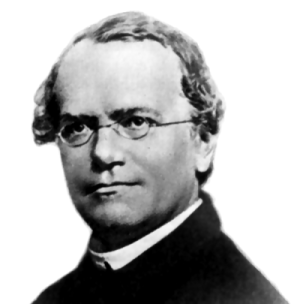
Gregor Mendel, the father of genetics: Mendel's work with pea plants demonstrated that certain traits follow particular patterns.
Classical Genetics
Classical, or Mendelian, genetics examines how genes are passed from one generation to the side by side, as well as how the presence or absence of a gene can be adamant via sexual reproduction. Gregor Mendel is known as the father of the field of genetics, and his piece of work with plant hybridization (specifically pea plants) demonstrated that sure traits follow particular patterns. This is referred to as the law of Mendelian inheritance.
Genes tin can be manipulated past selective breeding, which tin take an enormous touch on on behavior. For case, some dogs are bred specifically to exist obedient, like gilt retrievers; others are bred to be protective, like German shepards. In another case, Seymour Benzer discovered he could breed sure fruit flies with others to create distinct behavioral characteristics and change their circadian rhythms.
The Influence of Behavior on Genes
Behavior can influence genetic expression in humans and animals past activating or deactivating genes.
Learning Objectives
Talk over the ways in which beliefs can influence genes
Primal Takeaways
Primal Points
- Drug utilize, environmental exposure, and eating habits take all been linked to changes in gene expression. While some such influences are harmless or even beneficial, others can be extremely detrimental. Researchers promise to identify these behaviors and their effects.
- EEG and PET scans show psychologists how certain behaviors trigger reactions in the brain, which tin can atomic number 82 to the discovery of certain determinant genes, such as those that influence addictive behaviors.
- Exposure of a fetus to booze and drugs tin lead to a host of developmental problems after birth, the most serious of which is fetal alcohol syndrome.
Key Terms
- gene: A unit of heredity; a segment of Deoxyribonucleic acid or RNA that is transmitted from i generation to the side by side and that carries genetic information such as the sequence of amino acids for a protein.
- fetal booze syndrome: Any of a spectrum of birth defects resulting from excessive booze consumption by the female parent during pregnancy.
Beliefs can take an impact on genetic makeup, even every bit early as the prenatal period. It is important to understand the implications of behavior on genetic makeup in lodge to reduce negative ecology and behavioral influences on genes.
EEG and PET scans have the ability to show psychologists how sure behaviors trigger reactions in the brain. This has led to the discovery of specific genes, such as those that influence addictive behaviors. A variety of behaviors accept been shown to influence factor expression, including—but not limited to—drug use, exposure to the elements, and dietary habits.
Drugs and Alcohol
Prenatal exposure to sure substances, peculiarly drugs and alcohol, has detrimental effects on a growing fetus. The about serious consequences of prenatal drug or booze exposure involve newborn addiction and fetal alcohol syndrome (FAS). Fetal booze syndrome affects both concrete and mental development, dissentious neurons within the brain and often leading to cognitive impairment and beneath-average weight. Exposure to drugs and alcohol can likewise influence the genes of children and adults. Habit is idea to have a genetic component, which may or may not be acquired past a genetic mutation resulting from drug or alcohol utilize.
Temperature
Temperature exposure tin affect factor expression. For example, in Himalayan rabbits, the genetic expressions of fur, skin, and eyes are regulated by temperature. In the warm areas of the rabbits' bodies, the fur lacks paint due to cistron inactivity and turns white. On the extremities of the rabbits' bodies (nose, ears and feet) the gene is activated and therefore pigmented (usually blackness).
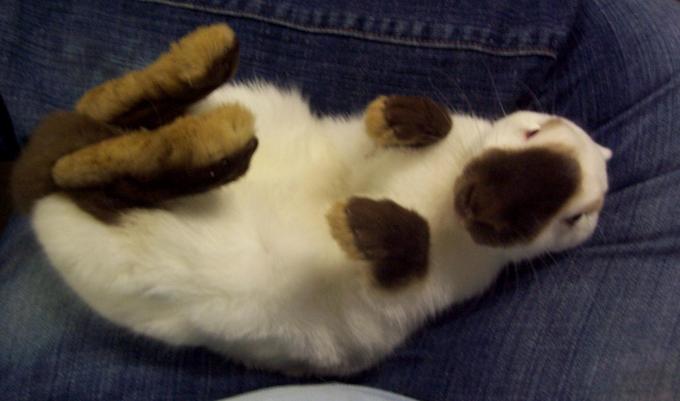
Himalayan rabbit: Exposure to cold temperatures activates paint-producing genes in the rabbit's extremities.
Low-cal
Light exposure also influences genetic expression. Thomas Hunt Morgan performed an experiment in which he exposed some caterpillars to light and kept others in darkness. Those exposed to certain light frequencies had corresponding fly colors when they became collywobbles (for case, ruby-red produced vibrant wing color, whereas blue led to stake wings). Darkness resulted in the palest wing color, leading him to conclude that light exposure influenced the genes of the butterflies. In this manner a caterpillar'due south beliefs can directly impact gene expression; a caterpillar that actively seeks out lite volition announced unlike as a butterfly than one that avoids it.
Nutrition
Lack of proper nutrition in early on childhood is withal some other factor that can lead to the alteration of genetic makeup. Human children who lack proper nutrition in the outset 3 years of life tend to have more genetic bug later in life, such as health issues and problems with schoolhouse performance.
Source: https://courses.lumenlearning.com/boundless-psychology/chapter/genetics-and-behavior/
Posted by: stormplacrour.blogspot.com
0 Response to "How Can Your Genetic Makeup Affect Your Personality And Behavior?"
Post a Comment